
Menu
Work
About
Contact

AI-powered Resume Screening
MokaHR provides end-to-end recruitment solutions for 2K+ enterprise clients. The project goal was to accelerate hiring cycle to encourage AI feature conversion from recruiters.
Why it matters
0→1 AI launch
The first AI feature integrated in the inbound application recruiting workflow — where I improved user trust on AI recommendation with 4.2/5 rating.
35% trial-to-paid
The AI hiring assistant converted 35% of trial users to paying customers after 2 months of launch — the fastest feature-to-revenue validation MokaHR had run.
Timeline
2026, 6-month
My Role
Sole designer on end-to-end screening workflow
Team
5-person pod inside a 10-person product team
The problem
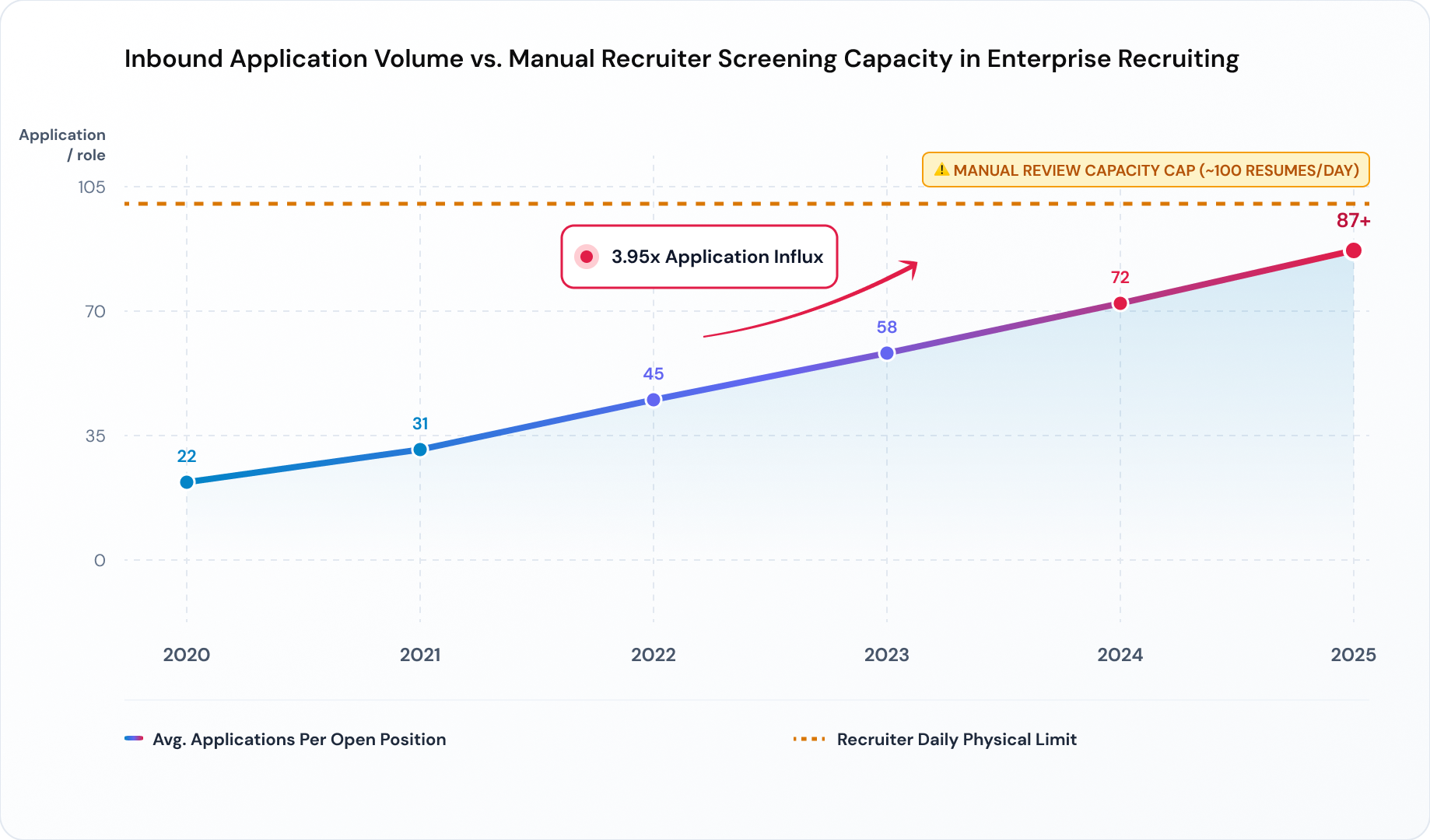
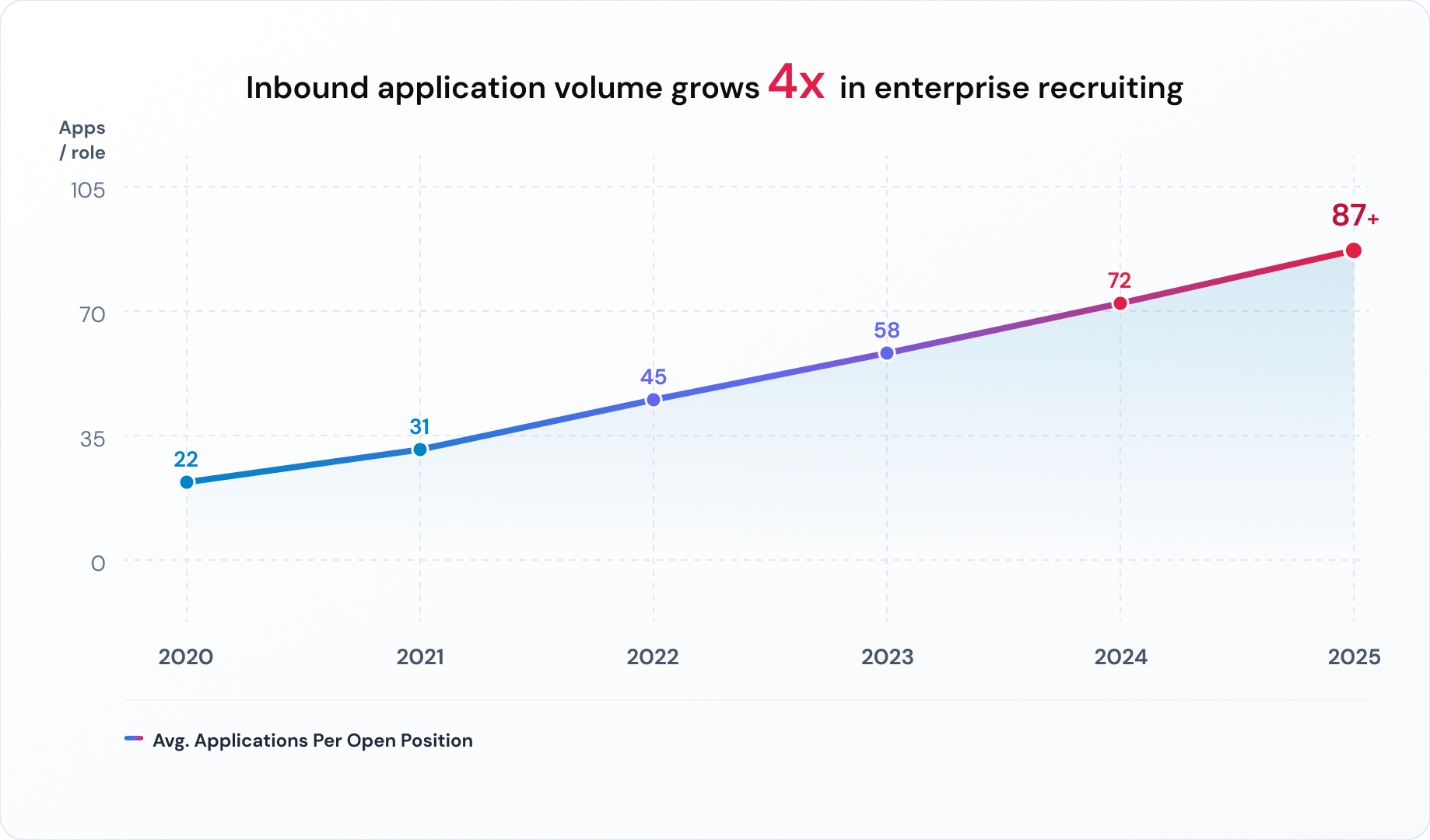
As inbound application volume continues to rise, MokaHR’s legacy ATS struggles to meet talent teams’ recruiting needs
Business opportunity
MokaHR set out to turn exploding application volume from its customers' biggest pain into its next growth engine
Deliver Hiring Efficiency That Sell
Retain existing and win new enterprise clients by moving the metrics customers buy on
Establish AI as a New Revenue Stream
Launch AI capabilities as premium, usage-based offerings that scale with recruiting activity
My Contribution
I owned design for AI-enabled recruiting experiences spanning discovery, product vision, 0–1 initiatives, and phased rollout

Discovery
Led user research and collaborated with analytics to validate hypothesis and frame high-impact opportunities.

Vision & Strategy
Used vision design to drive product directions, and partner with PM to shape roadmap and priorities.

0→1 UX Design
Initiated and owned AI powered recruiting features from concept through launch.

System & Patterns
Redesigned platform’s visual and established reusable patterns for consistent, trust worthy AI experiences.
My approach
Establish a vision design to drive product directions and tie customer needs with business wins
After conducting user research, I applied insights to quickly map out a cohesive experience across the entire AI-assisted recruiting journey.
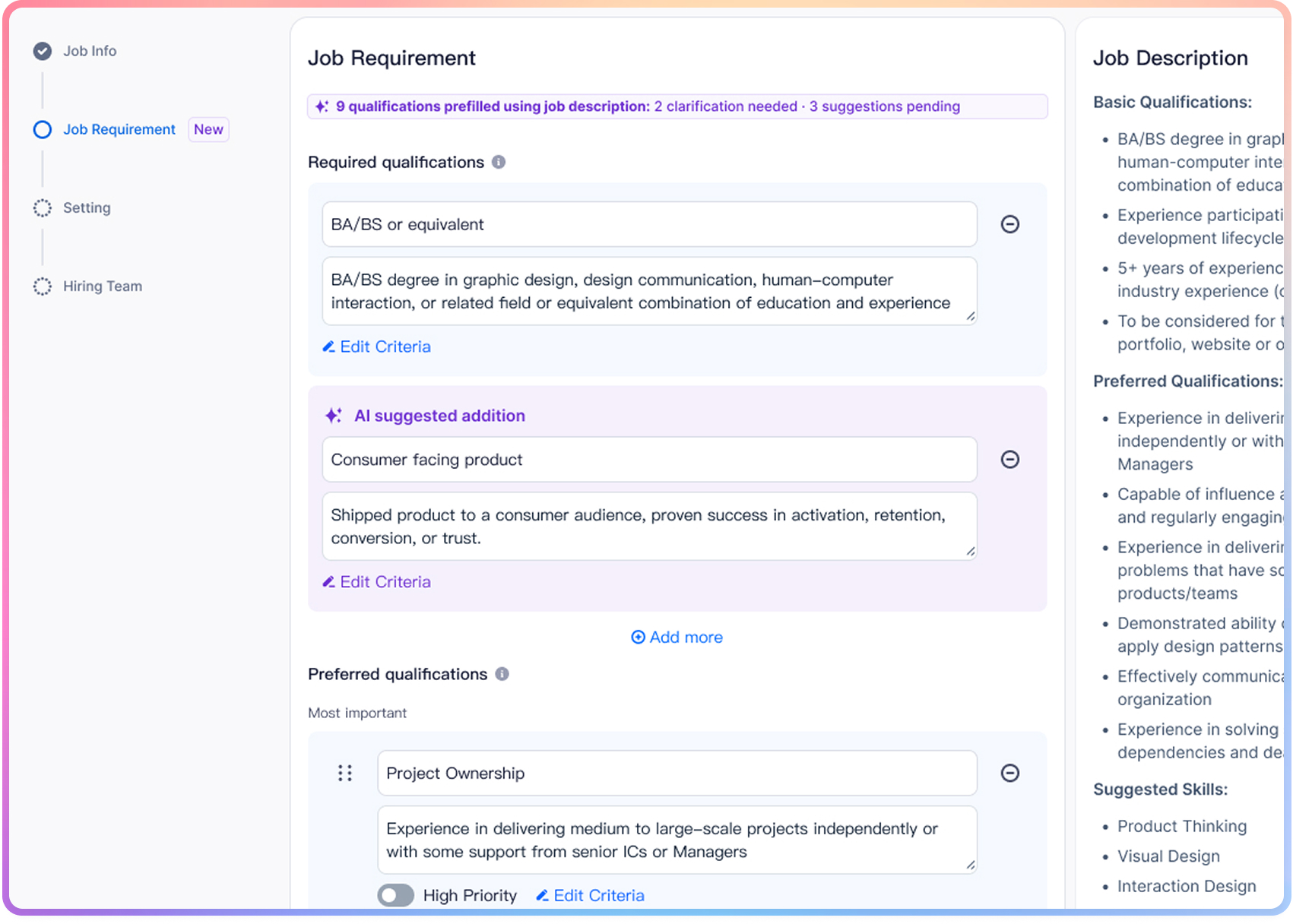
Stage 01
Job Creation
user problem
Reviewers apply inconsistent standards that live in their heads
solution
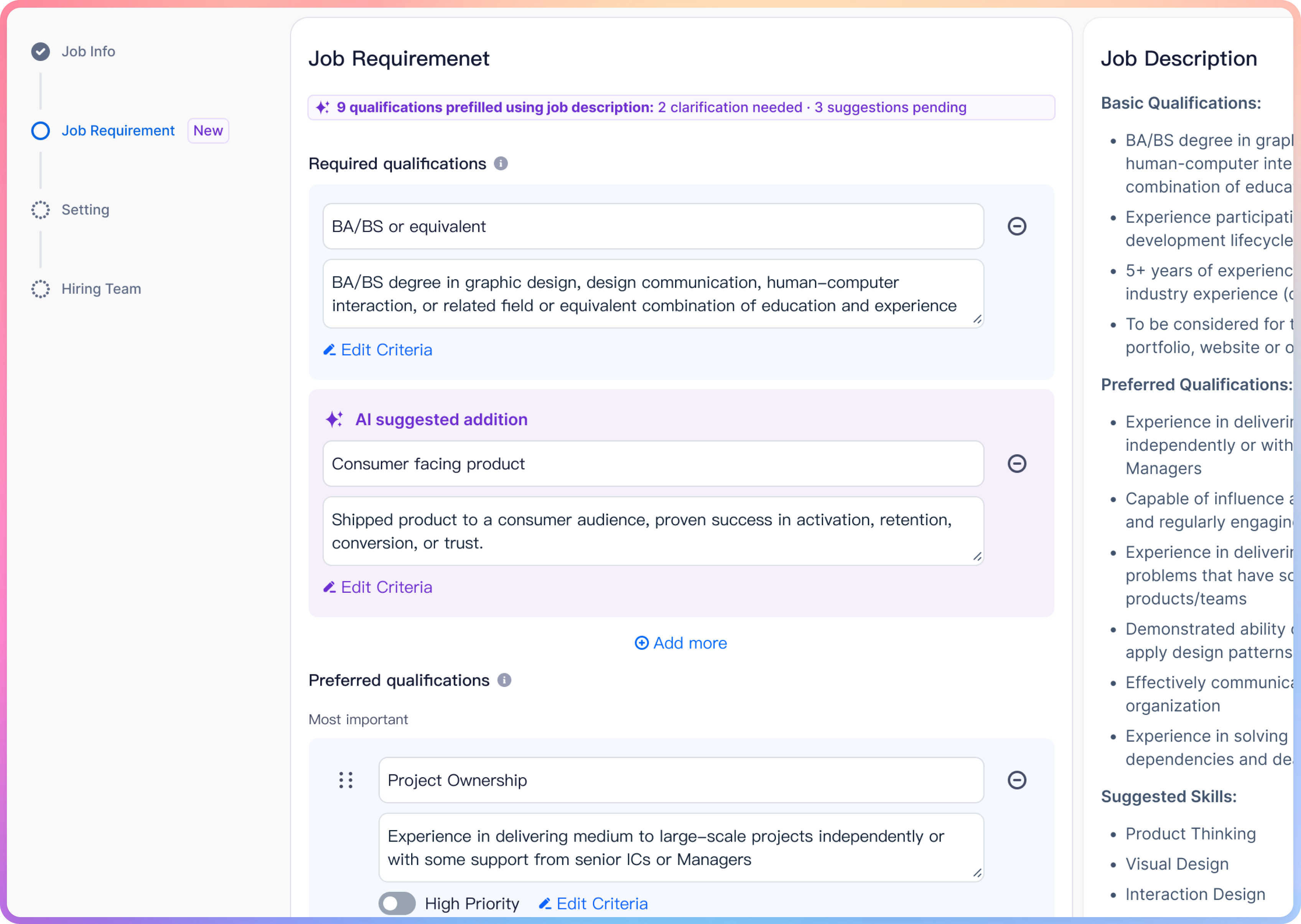
AI generated job requirement
Defined criteria straight from JD to benchmark candidates’ qualifications
Stage 02
Resume Screening
user problem
Large application volume makes it impossible to review every application
solution
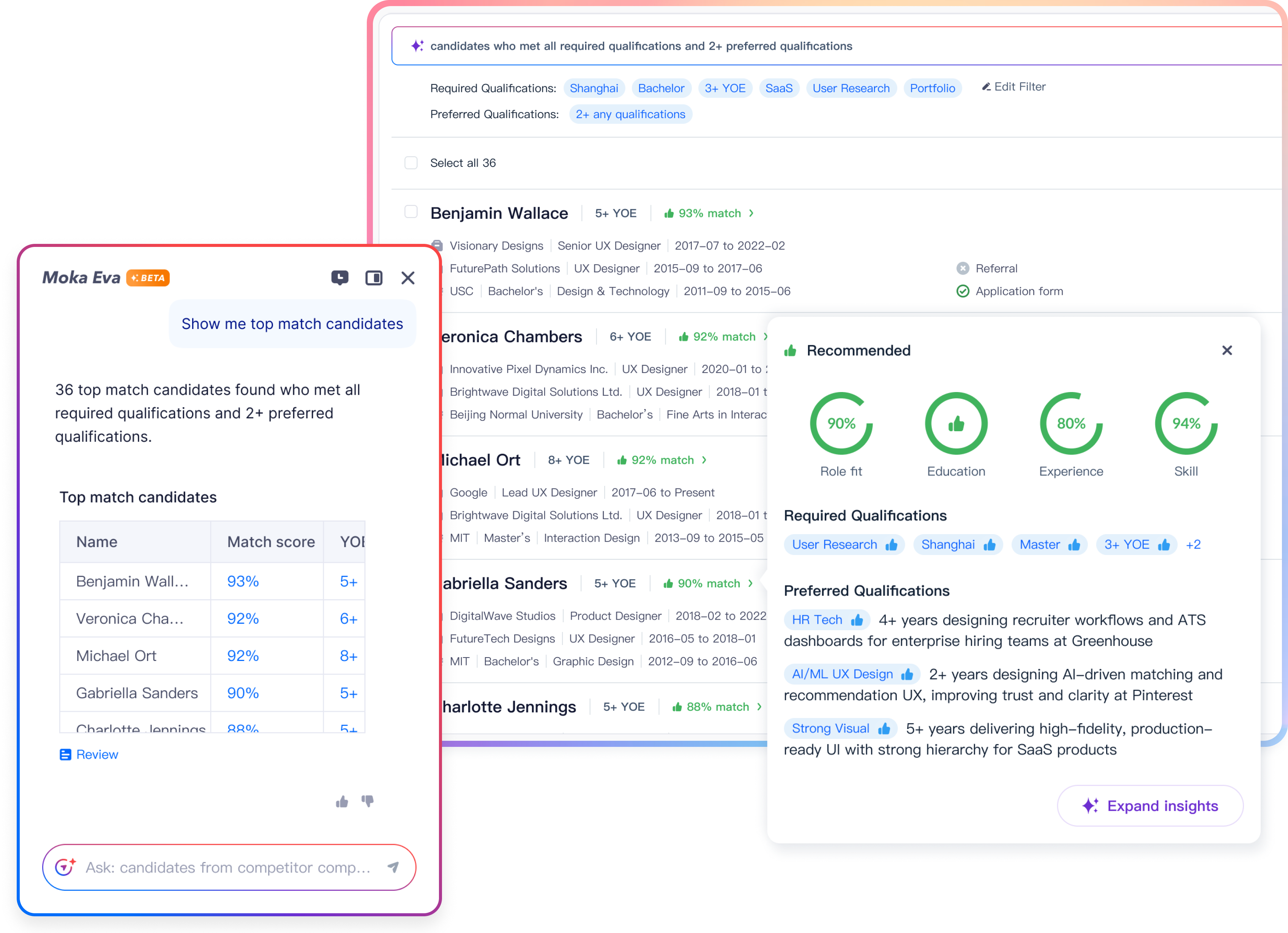
Job & candidate fit evaluation
Rank candidates by criteria match so that recruiters see the top fit first
Stage 03
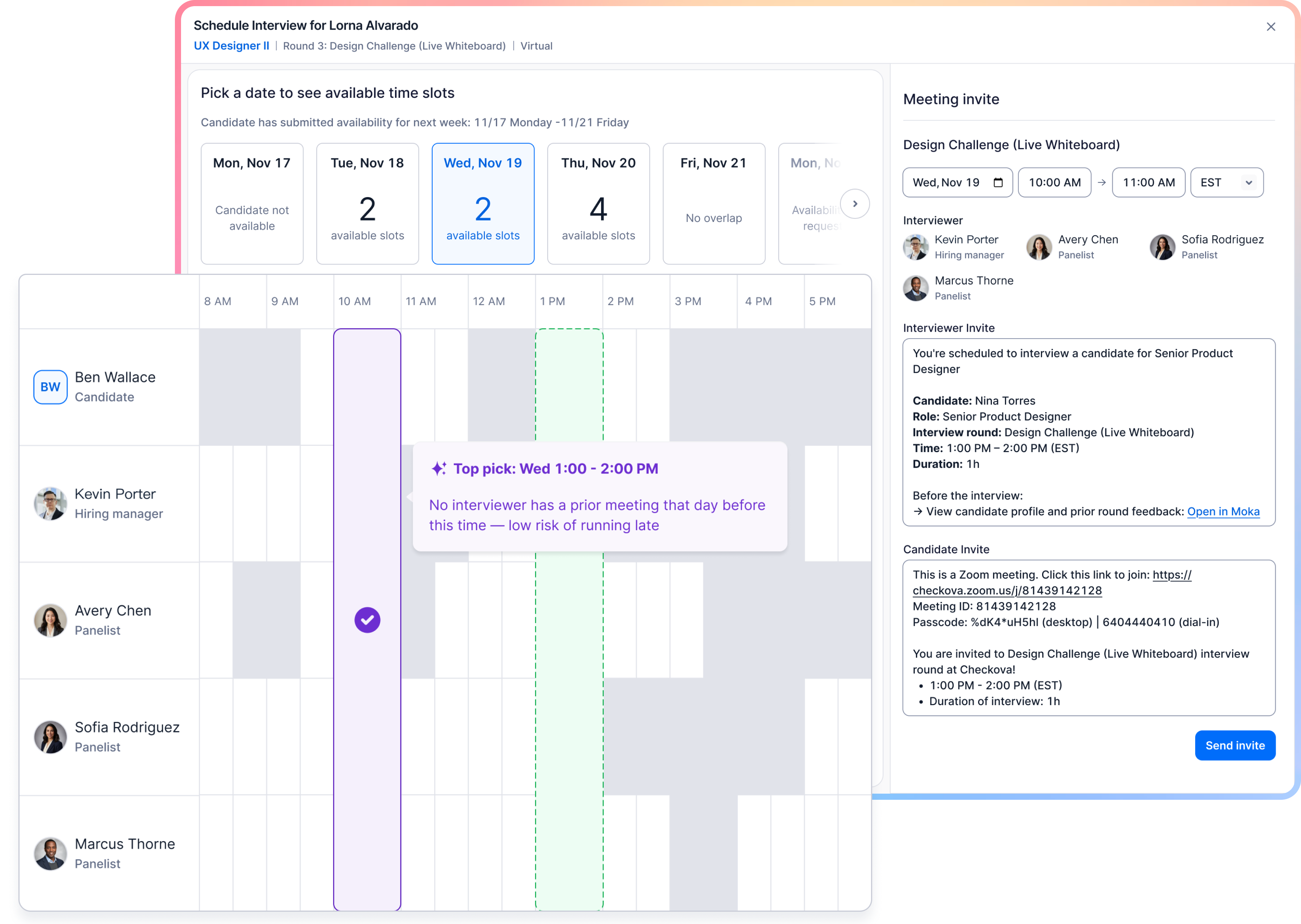
Interview Scheduling
user problem
Lost track of coordination among multiple interviewers and candidates
solution
Scheduling automation
Auto scheduler recommends the best time for multiple interviewers
Stage 04
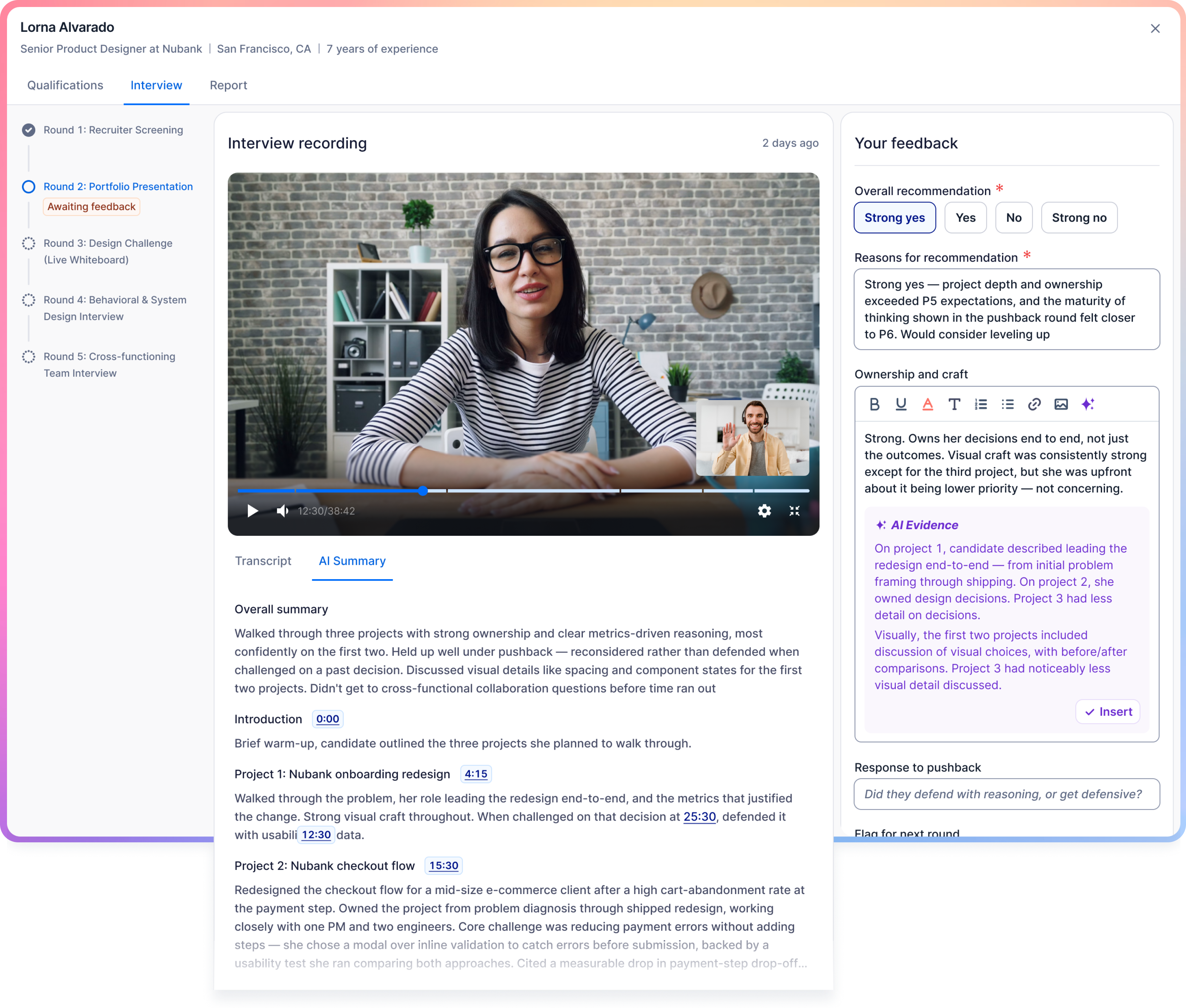
Interviewing & Feedback
user problem
The longer interviewers delay feedback, the more quality drops
solution
Post-interview AI summary + feedback assistance
Draft structured feedback with insights from AI summary
Stage 05
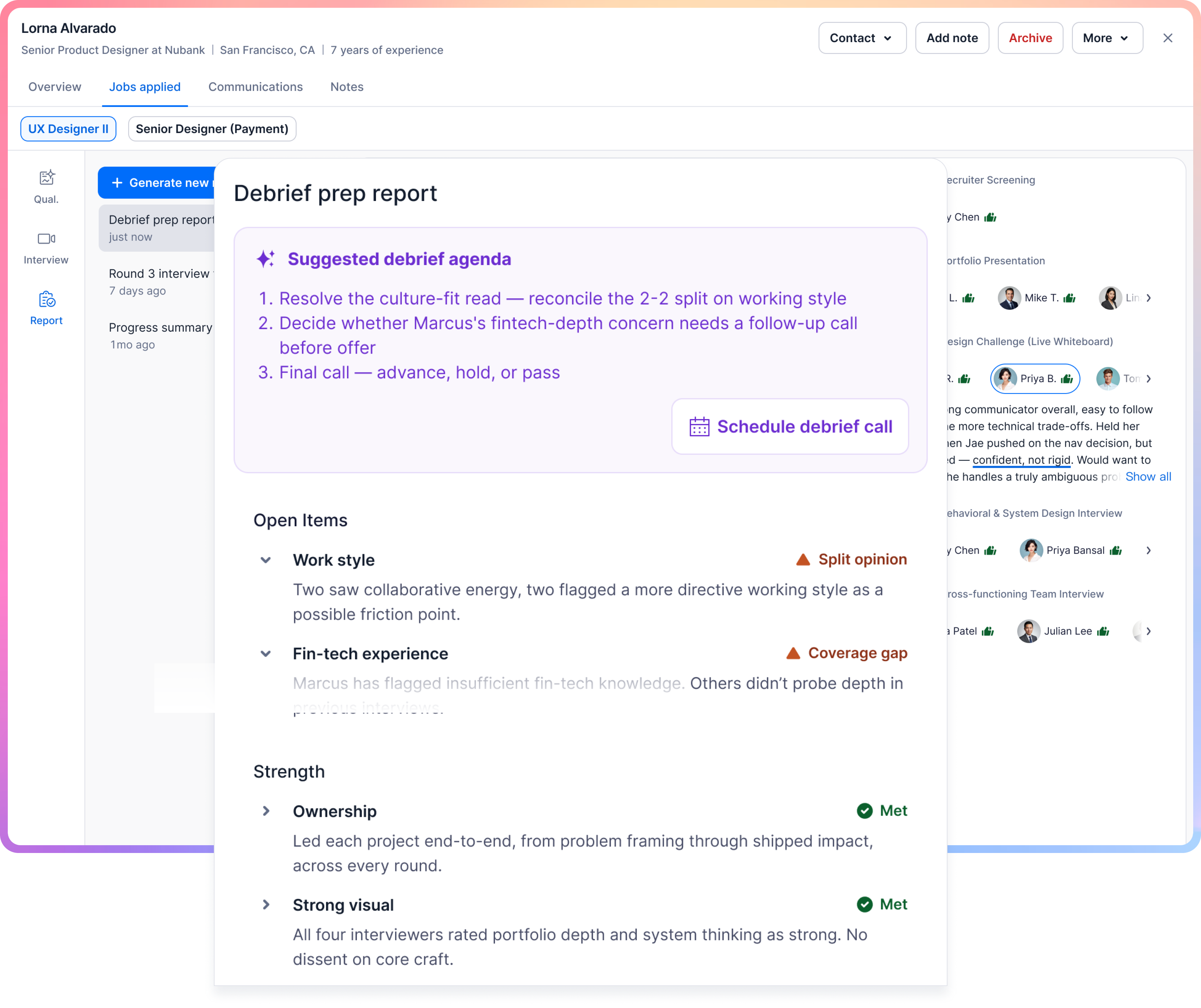
Decision & Offer
user problem
Slow team consensus leads to delayed offer
solution
Summary report
Synthesize notes to reveal team consensus and gaps
pRIORITIZATION
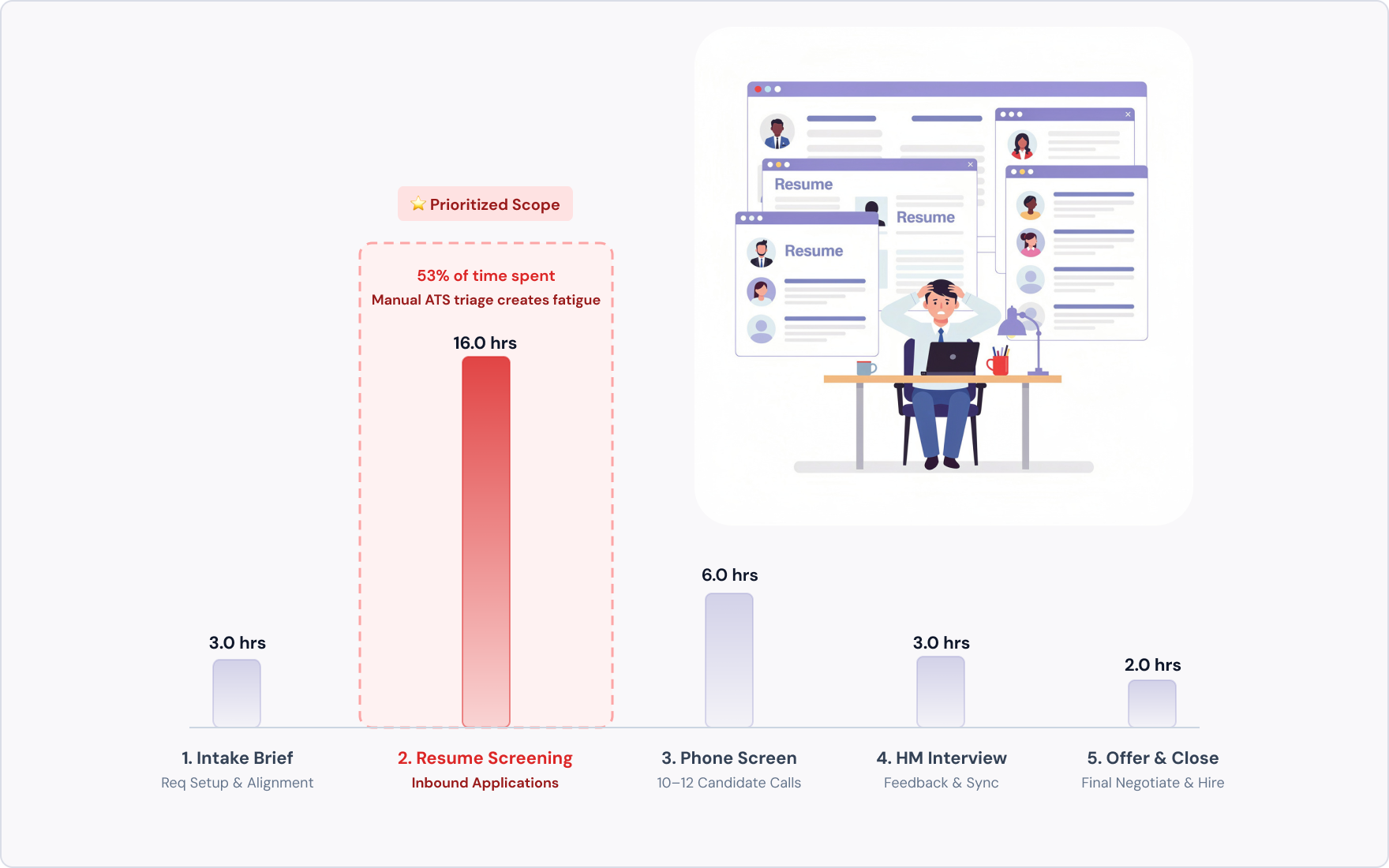
Prioritize resume screening for initial AI feature launch as it is the biggest bottleneck stage
With the vision design ready, I was able to partner with PM and analytics to estimate impact and prioritize scopes. The prioritized scopes are expected to increase revenue by 20% while resolve biggest user pain point.
The user Problem
User research surfaced 3 major user pain points each drives a solution

I want to focus my limited time on reviewing the best-fit candidates

Recruiters only have time to review 10% of applications, risk missing out on great candidates

I want to quickly locate candidates with specific experience

Old Boolean search & filters took so many iterations to find what recruiters want

I want to validate candidates’ qualifications thoroughly
Manually confirming if resume evidence matches every qualification is time-consuming
Solution
AI-driven application review follows well defined criteria to quickly surfaces top match, helping recruiters review candidates with high consistency, efficiency and confidence


User need 1
”I want to focus my limited time on reviewing the best-fit candidates”
Solution 1: Top match shortlist
AI-generated prompts guide recruiters to explore relevant candidate groups


User need 2
“I want to quickly locate candidates with specific experience.”
Solution 2: suggested searches
AI-generated prompts guide recruiters to explore relevant candidate groups


User need 3
“I want to validate candidates’ qualifications thoroughly”
Solution 3: qualification summary + evidence
AI-generated qualification summaries map each requirement to supporting evidence highlighted in the original resume
Design Study
Design Challenge
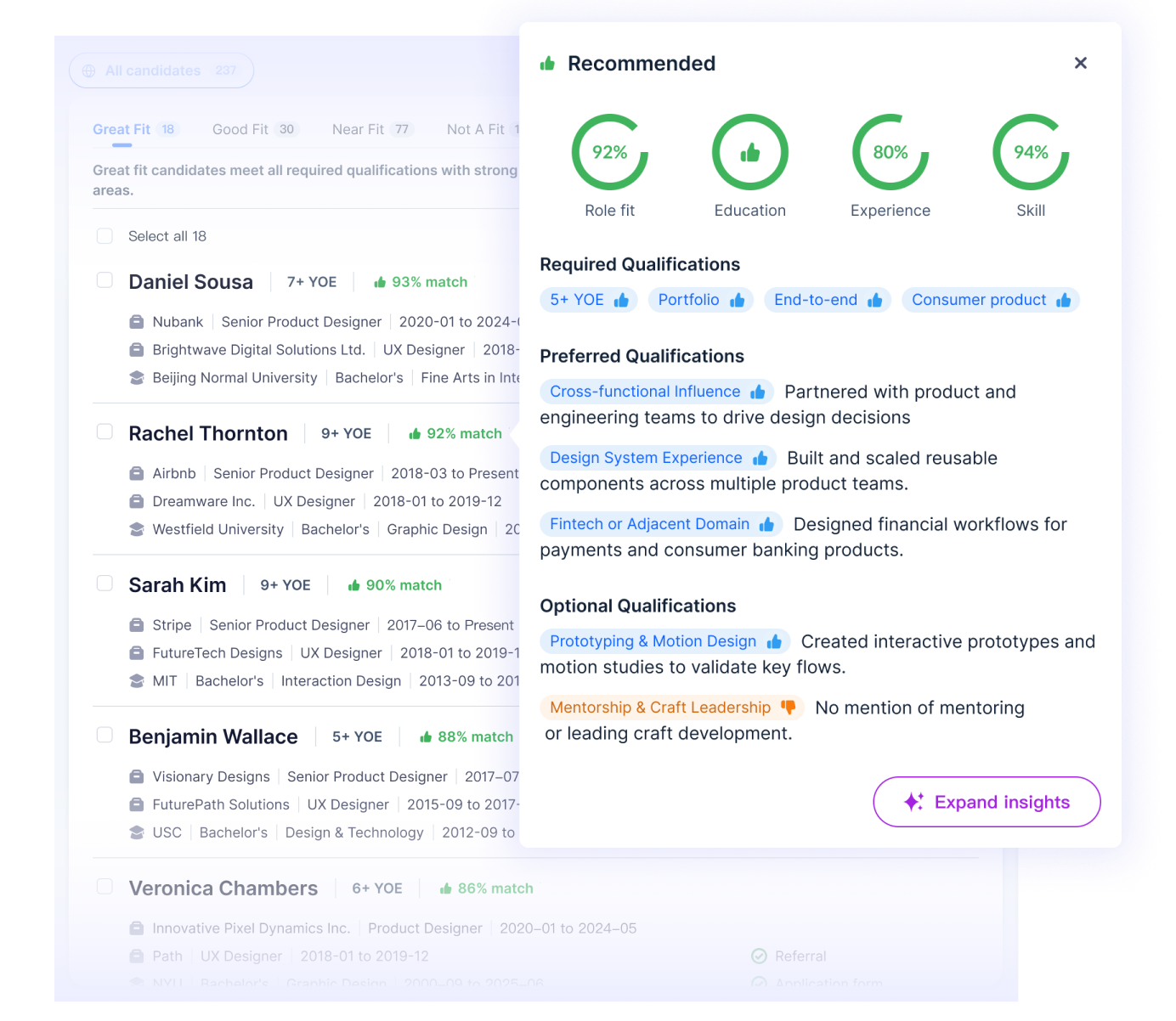
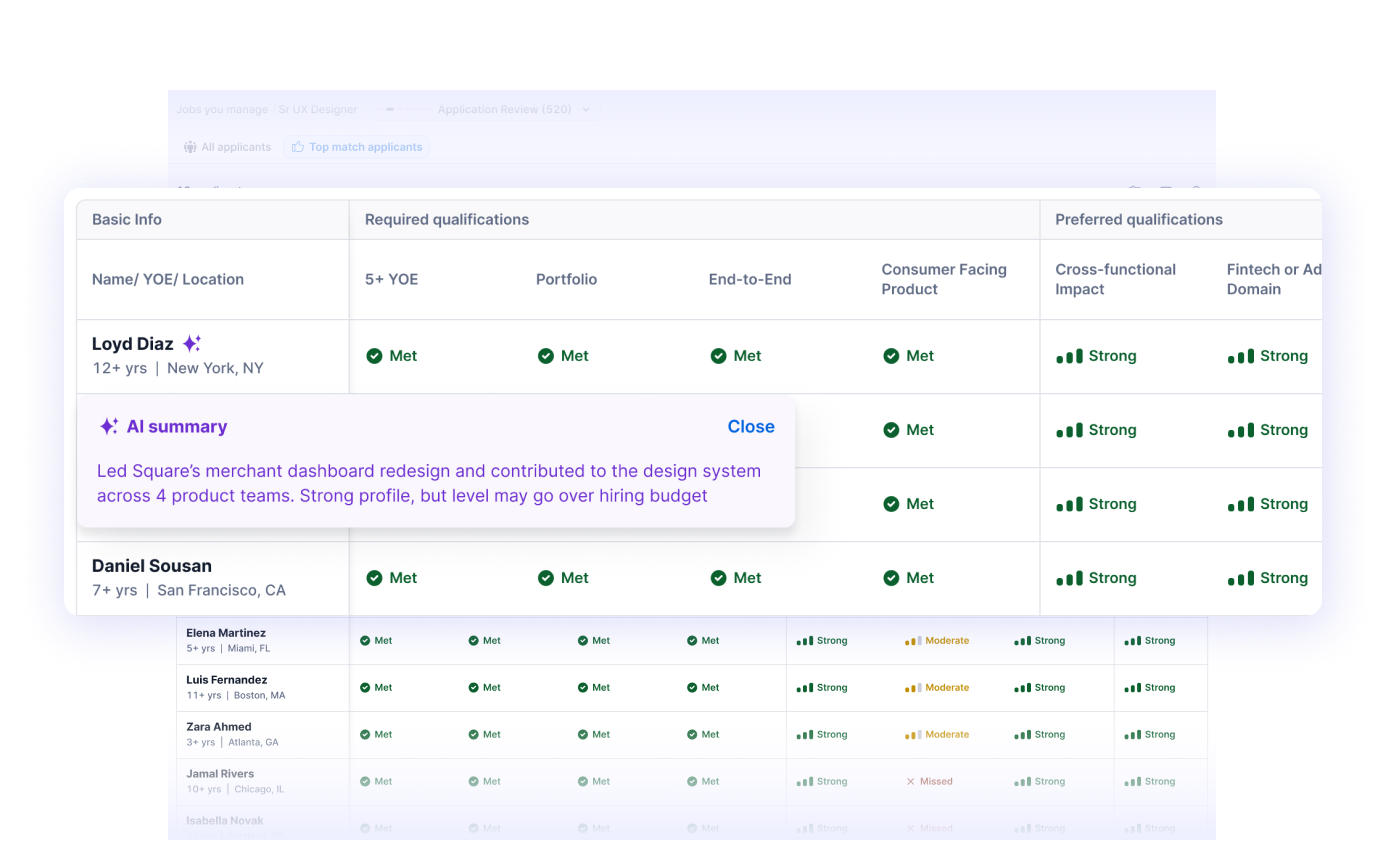
How might we communicate candidate-requirement fit?
I explored 2 options to display the evaluation of candidate-requirement fit. Through concept testing with 8 users, I landed on the UI that best fit recruiters’ mental model and information needs.
Option 1
The overall score feels arbitrary.
option 2: final pick ✅
Level of fit indicator for each requirement enables fast scanning.
Impact
The AI-assistant features reduced manual workload and archived conversion.
25%
reduction in time-to-interview**
35%
trial-to-paid conversion**
30%
increase in AI trust rating*
*Measured after 1st AI launch (screening only)
**Measured across combined AI launch (screening, outreach, interview)
Let’s Connect!
© 2025 Yiqing Wang
Work

Resume

About
AI-powered Resume Screening
MokaHR provides end-to-end recruitment solutions for 2K+ enterprise clients. The project goal was to accelerate hiring cycle to encourage AI feature conversion from recruiters.
Why it matters
0→1 AI launch
The first AI feature integrated in the inbound application recruiting workflow — where I improved user trust on AI recommendation with 4.2/5 rating.
35% trial-to-paid
The AI hiring assistant converted 35% of trial users to paying customers after 2 months of launch — the fastest feature-to-revenue validation MokaHR had run.
Timeline
2026, 6-month
My Role
Sole designer on end-to-end screening workflow
Team
5-person pod inside a 10-person product team
The problem
As inbound application volume continues to rise, MokaHR’s legacy ATS struggles to meet talent teams’ recruiting needs
Business opportunity
MokaHR set out to turn exploding application volume from its customers' biggest pain into its next growth engine
Deliver Hiring Efficiency That Sell
Retain existing and win new enterprise clients by moving the metrics customers buy on
Establish AI as a New Revenue Stream
Launch AI capabilities as premium, usage-based offerings that scale with recruiting activity
My Contribution
I owned design for AI-enabled recruiting experiences spanning discovery, product vision, 0–1 initiatives, and phased rollout
Discovery
Led user research and collaborated with analytics to validate hypothesis and frame high-impact opportunities.

Vision & Strategy
Used vision design to drive product directions, and partner with PM to shape roadmap and priorities.

0→1 UX Design
Initiated and owned AI powered recruiting features from concept through launch.

System & Patterns
Redesigned platform’s visual and established reusable patterns for consistent, trust worthy AI experiences.
My approach
Establish a vision design to drive product directions and tie customer needs with business wins
After conducting user research, I applied insights to quickly map out a cohesive experience across the entire AI-assisted recruiting journey.
Stage 01
Job Creation
user problem
Reviewers apply inconsistent standards that live in their heads
solution
AI generated job requirement
Defined criteria straight from JD to benchmark candidates’ qualifications
Stage 02
Resume Screening
user problem
Large application volume makes it impossible to review every application
solution
Job & candidate fit evaluation
Rank candidates by criteria match so that recruiters see the top fit first
Stage 03
Interview Scheduling
user problem
Lost track of coordination among multiple interviewers and candidates
solution
Scheduling automation
Auto scheduler recommends the best time for multiple interviewers
Stage 04
Interviewing & Feedback
user problem
The longer interviewers delay feedback, the more quality drops
solution
Post-interview AI summary + feedback assistance
Draft structured feedback with insights from AI summary
Stage 05
Decision & Offer
user problem
Slow team consensus leads to delayed offer
solution
Summary report
Synthesize notes to reveal team consensus and gaps
pRIORITIZATION
Prioritize resume screening for initial AI feature launch as it is the biggest bottleneck stage
With the vision design ready, I was able to partner with PM and analytics to estimate impact and prioritize scopes. The prioritized scopes are expected to increase revenue by 20% while resolve biggest user pain point.
User Problems
User research surfaced 3 major user pain points each drives a solution
Pain Point
User Need
1
Recruiters only have time to review 10% of applications, risk missing out on great candidates

I want to focus my limited time on reviewing the best-fit candidates
2
Old Boolean search & filters took so many iterations to find what recruiters want
I want to quickly locate candidates with specific experience
3
Manually confirming if resume evidence matches every qualification is time-consuming
I want to validate candidates’ qualifications thoroughly
Solution
AI-driven application review follows well defined criteria to quickly surfaces top match, helping recruiters review candidates with high consistency, efficiency and confidence
User need 1
”I want to focus my limited time on reviewing the best-fit candidates”
Solution 1: Top match shortlist
AI-generated prompts guide recruiters to explore relevant candidate groups
User need 2
“I want to quickly locate candidates with specific experience.”
Solution 2: suggested searches
AI-generated prompts guide recruiters to explore relevant candidate groups
User need 3
“I want to validate candidates’ qualifications thoroughly”
Solution 3: qualification summary + evidence
AI-generated qualification summaries map each requirement to supporting evidence highlighted in the original resume
Design Study
Design Challenge
How might we communicate candidate-requirement fit?
I explored 2 options to display the evaluation of candidate-requirement fit. Through concept testing with 8 users, I landed on the UI that best fit recruiters’ mental model and information needs.
Option 1
The overall score feels arbitrary.
option 2: final pick ✅
Level of fit indicator for each requirement enables fast scanning.
Impact
The AI-assistant features reduced manual workload and archived conversion.
30%
increase in AI trust rating*
25%
reduction in time-to-interview**
35%
trial-to-paid conversion**
*Measured after 1st AI launch (screening only)
**Measured across combined AI launch (screening, outreach, interview)
Let’s Connect!
© 2026 Yiqing Wang
Work
Resume
About
AI-powered Resume Screening
MokaHR provides end-to-end recruitment solutions for 2K+ enterprise clients. The project goal was to accelerate hiring cycle to encourage AI feature conversion from recruiters.
Timeline
2026, 6-month
My Role
Sole designer on end-to-end screening workflow
Team
5-person pod inside a 10-person product team
Why it matters
0→1 AI launch
The first AI feature integrated in the inbound application recruiting workflow — where I improved user trust on AI recommendation with 4.2/5 rating.
35% trial-to-paid
The AI hiring assistant converted 35% of trial users to paying customers after 2 months of launch — the fastest feature-to-revenue validation MokaHR had run.
The problem
As inbound application volume continues to rise, MokaHR’s legacy ATS struggles to meet talent teams’ recruiting needs
Business opportunity
MokaHR set out to turn exploding application volume from its customers' biggest pain into its next growth engine
Deliver Hiring Efficiency That Sell
Retain existing and win new enterprise clients by moving the metrics customers buy on
Establish AI as a New Revenue Stream
Launch AI capabilities as premium, usage-based offerings that scale with recruiting activity
My Contribution
I owned design for AI-enabled recruiting experiences spanning discovery, product vision, 0–1 initiatives, and phased rollout
Discovery
Led user research and collaborated with analytics to validate hypothesis and frame high-impact opportunities.

Vision & Strategy
Used vision design to drive product directions, and partner with PM to shape roadmap and priorities.

0→1 UX Design
Initiated and owned AI powered recruiting features from concept through launch.

System & Patterns
Redesigned platform’s visual and established reusable patterns for consistent, trust worthy AI experiences.
My approach
Establish a vision design to drive product directions and tie customer needs with business wins
After conducting user research, I applied insights to quickly map out a cohesive experience across the entire AI-assisted recruiting journey.


Stage 01
Job Creation
user problem
Reviewers apply inconsistent standards that live in their heads
solution
AI generated job requirement
Defined criteria straight from JD to benchmark candidates’ qualifications
Stage 02
Resume Screening
user problem
Large application volume makes it impossible to review every application
solution
Job & candidate fit evaluation
Rank candidates by criteria match so that recruiters see the top fit first
Stage 03
Interview Scheduling
user problem
Lost track of coordination among multiple interviewers and candidates
solution
Scheduling automation
Auto scheduler recommends the best time for multiple interviewers
Stage 04
Interviewing & Feedback
user problem
The longer interviewers delay feedback, the more quality drops
solution
Post-interview AI summary + feedback assistance
Draft structured feedback with insights from AI summary
Stage 05
Decision & Offer
user problem
Slow team consensus leads to delayed offer
solution
Summary report
Synthesize notes to reveal team consensus and gaps
pRIORITIZATION
Prioritize resume screening for initial AI feature launch as it is the biggest bottleneck stage
With the vision design ready, I was able to partner with PM and analytics to estimate impact and prioritize scopes. The prioritized scopes are expected to increase revenue by 20% while resolve biggest user pain point.
User Problems
User research surfaced 3 major user pain points each drives a solution
Pain Point
User Need
1
Recruiters only have time to review 10% of applications, risk missing out on great candidates
I want to focus my limited time on reviewing the best-fit candidates
2
Old Boolean search & filters took so many iterations to find what recruiters want
I want to quickly locate candidates with specific experience
3
Manually confirming if resume evidence matches every qualification is time-consuming
I want to validate candidates’ qualifications thoroughly
Solution
AI-driven application review follows well defined criteria to quickly surfaces top match, helping recruiters review candidates with high consistency, efficiency and confidence
User need 1
”I want to focus my limited time on reviewing the best-fit candidates”
Solution 1: Top match shortlist
AI-generated prompts guide recruiters to explore relevant candidate groups
User need 2
“I want to quickly locate candidates with specific experience.”
Solution 2: suggested searches
AI-generated prompts guide recruiters to explore relevant candidate groups
User need 3
“I want to validate candidates’ qualifications thoroughly”
Solution 3: qualification summary + evidence
AI-generated qualification summaries map each requirement to supporting evidence highlighted in the original resume
Design Study
Design Challenge
How might we communicate candidate-requirement fit?
I explored 2 options to display the evaluation of candidate-requirement fit. Through concept testing with 8 users, I landed on the UI that best fit recruiters’ mental model and information needs.
Option 1
The overall score feels arbitrary.
option 2: final pick ✅
Level of fit indicator for each requirement enables fast scanning.
Impact
The AI-assistant features reduced manual workload and archived conversion.
30%
increase in AI trust rating*
25%
reduction in time-to-interview**
35%
trial-to-paid conversion**
*Measured after 1st AI launch (screening only)
**Measured across combined AI launch (screening, outreach, interview)
Let’s Connect!
© 2026 Yiqing Wang